Buying NSE shares from abroad
Nothing in the rules requires you to be in Kenya to own shares on the Nairobi Securities Exchange. What changes when you are abroad is the paperwork, the way money moves, the tax rate on dividends and the exchange rate in between. This guide takes the steps in order.
In this guide
Who this is for
Two groups: Kenyan citizens living abroad, who may already hold a national ID and a KRA PIN, and foreign nationals with no Kenyan documents at all. Both can own NSE shares. Kenya places no general limit on foreign ownership of listed companies, though a few sectors keep local-shareholding rules that your broker will flag for the specific company.
A third group is people who moved abroad and left shares behind in a CDS account they have not looked at for years. Those accounts still exist; the section on dormant accounts in How to open a CDS account explains how to find them.
Documents and the KRA PIN
The CDS account is opened for you by a Central Depository Agent, a licensed stockbroker, investment bank or custodian bank. CDSC's requirements are the same as for a resident, with one addition: foreign documents must be notarised.
- Passport, notarised copy (or a Kenyan ID for citizens who hold one).
- KRA PIN certificate. Every CDS account is linked to a PIN because dividend tax is deducted through it. KRA issues PINs to non-residents through its iTax portal; brokers and tax agents routinely help with the application.
- Proof of address abroad, typically a utility bill or bank statement.
- Two passport photos and the signed CDS 1 form, which brokers handle by email or in their app.
- Bank account details for dividends and sale proceeds, in Kenya or abroad.
Dosikaa, the exchange's app, and Ziidi Trader in the M-PESA app are built around Kenyan IDs and phone lines. Ziidi Trader also holds shares in a pooled nominee account rather than a CDS account in your name. For most people abroad the route is a licensed broker that onboards remotely.

Choosing a broker from abroad
Any firm on the CMA's lists of stockbrokers and investment banks may act for you; the full list is in NSE stockbrokers: list and fees. The questions that matter more when you are abroad are practical ones:
- Does the firm onboard remotely, and does it accept notarisation from your country?
- Does it accept international transfers, and to which bank? Ask for the client-account details in writing on letterhead.
- Does it have an app or web portal you can use in your time zone, or does it take orders by email?
- Can it pay dividends and sale proceeds to a foreign bank account, and what does the outward transfer cost?
- Will it help with the KRA PIN application?
A firm asking you to pay into a personal M-PESA number or a personal bank account is a warning sign. Legitimate client money goes to an account in the firm's name.
Moving money in and out
Shares on the NSE are priced and settled in Kenyan shillings. You send foreign currency by international bank transfer to the broker's client account, where it is converted, or you send shillings from a Kenyan account you still hold. Card top-ups exist at some firms. Your bank will charge a transfer fee and the conversion will carry a spread, both of which sit on top of the roughly 2.1 % trading fee.
Taking money out works in reverse: a sale settles on T+3 into your broker account, and the broker pays out to the bank account on file. Kenya does not restrict repatriating dividends or sale proceeds, but banks apply their normal source-of-funds checks, so keep the contract notes.
| Step | Example with GBP 500 |
|---|---|
| Transfer to broker at 1 GBP = KES 170 | KES 85,000 arrives less a bank fee |
| Buy shares at KES 85,000 with 2.1 % fees | About KES 83,250 of shares |
| Shares up 10 %, shilling unchanged | Holding worth about KES 91,575 |
| Shares up 10 %, shilling weakens to 1 GBP = KES 187 | Same KES 91,575, now about GBP 490 |
The last two rows are the point: a gain in shillings can be a loss in pounds or dollars if the shilling weakens, and the reverse when it strengthens. Two prices move, not one.
Tax for non-residents
| Item | Rate for non-residents | Notes |
|---|---|---|
| Dividends | 15 % withholding tax | Deducted at source through your KRA PIN; a final tax in Kenya. Residents pay 5 % |
| Dividends under a double-tax treaty | Lower where a treaty applies | PwC's table lists, for example, 10 % for India and South Africa and 5 % for the UAE, Qatar, Iran and the Seychelles |
| Capital gains on listed shares | Exempt | Gains on shares traded on the NSE are outside Kenyan capital gains tax |
| Tax at home | Depends on where you live | Your country of residence may tax the dividend or gain and may credit the Kenyan withholding |
Rates are as at September 2026 from PwC's Kenya withholding tax table (reviewed 17 July 2026). Claiming a treaty rate usually needs a certificate of tax residence from your home country given to the broker or the company's registrar before payment. This is a summary, not tax advice; the rules at home are outside the scope of this site.
Trading across time zones
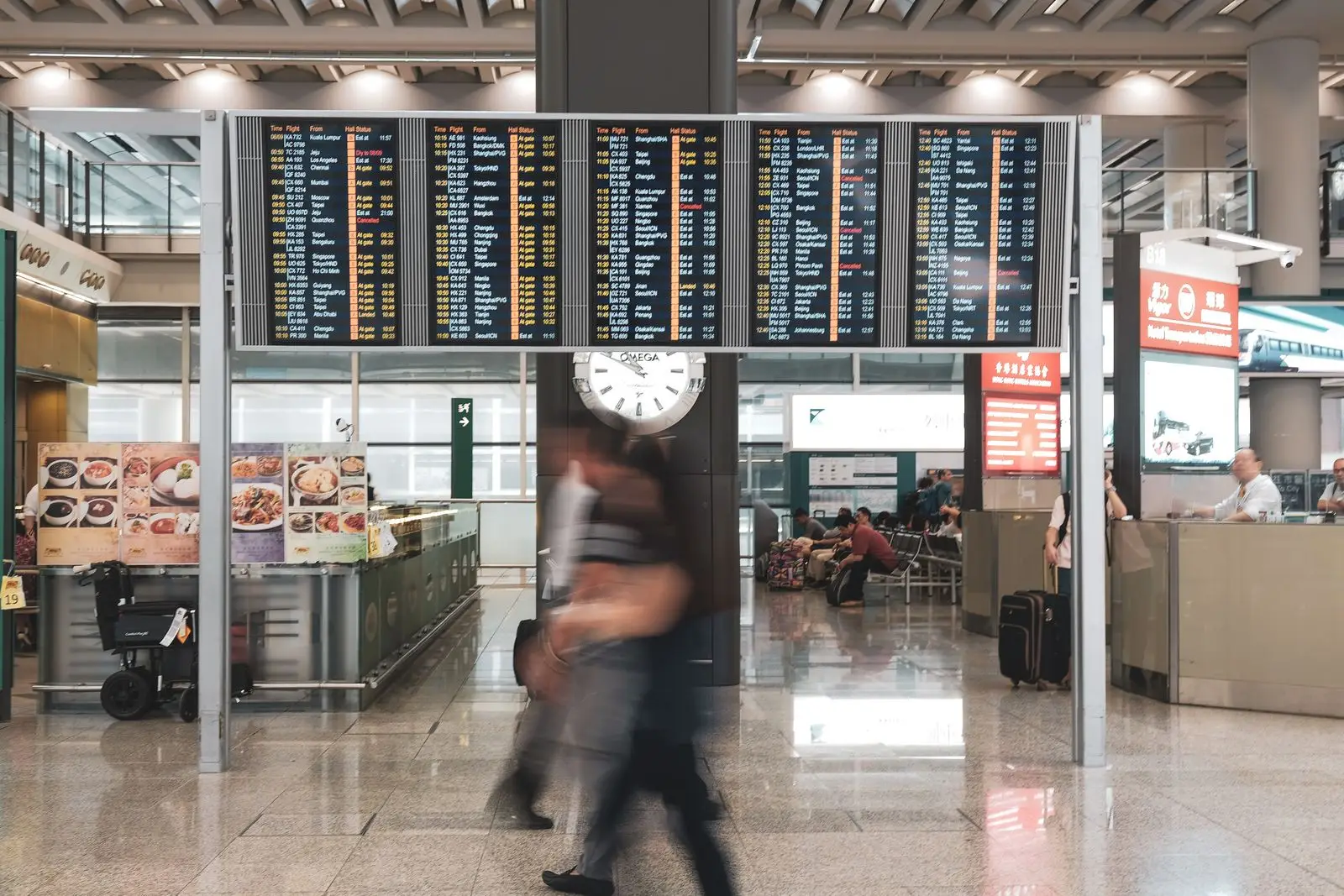
The NSE trades 9.30 am to 3.00 pm East Africa Time after a 9.00 am pre-open, Monday to Friday, closed on Kenyan public holidays. That is 6.30 am to 12.00 pm in London in winter, 1.30 am to 7.00 am in New York, 10.30 am to 4.00 pm in Dubai. Broker apps accept orders outside the session and submit them at the next pre-open, so a limit order placed in the evening abroad is in the book when Nairobi opens. The hours and holidays guide has the full calendar.
Prices on KenyaStocks are end of day, published after the 3.00 pm close with the date on every view, so they are the same numbers whether you read them in Nairobi or Nairobi's night. Company pages carry the headlines that mention each company, which is the practical way to follow a holding from a distance.
Statements and records
Keep three things: the contract note for each trade, the CDS statements (email statements from CDSC are free and arrive in months with activity) and the dividend advice from the registrar showing tax withheld. Between them they prove ownership, cost and tax paid, which is what a home tax authority or a bank asks for. Update your address, phone and bank details with the broker whenever they change; unpaid dividends otherwise end up as unclaimed assets.
Common questions
Can a foreigner with no Kenyan ID buy NSE shares?
Yes. A licensed broker opens the CDS account with a notarised passport copy, proof of address and a KRA PIN obtained through iTax. There is no general foreign-ownership limit on listed companies.
How much tax is taken from my dividends abroad?
15 % withholding tax, deducted at source and final in Kenya, unless a double-tax treaty between Kenya and your country sets a lower rate. Gains on NSE-listed shares are exempt from capital gains tax.
Can I use M-PESA from abroad?
Only with a Kenyan line. Most people abroad fund the broker's client account by international bank transfer, which carries a bank fee and a currency spread.
Sources
- CDSC: home page (account requirements; Ziidi Trader nominee structure)
- CDSC: Central Depository Agents
- CMA: licensed stockbrokers
- PwC Worldwide Tax Summaries: Kenya withholding taxes (reviewed 17 July 2026)
- Income Tax Act (Cap. 470), First Schedule para. 36(g)(ii): gains on listed securities not chargeable (Kenya Law)
- MMF Pro Kenya: NSE trading hours (updated 26 June 2026)
Last reviewed · General information, not investment advice.